
Blackjack Insurance Explained
Blackjack offers several decisions that can influence how a hand unfolds, including hitting, standing, doubling down, and splitting pairs. Another option you may encounter is insurance, a side bet offered when the dealer's face-up card is an Ace. Although the name suggests protection against losing your original wager, blackjack insurance works differently from traditional insurance.
Understanding how blackjack insurance works, when it's available, and how payouts are calculated can help you make more informed decisions at the table. Here's what to know before your next blackjack game at Cache Creek Casino Resort.
Key Takeaways
- Blackjack insurance is an optional side bet that the dealer has a natural blackjack when their face-up card is an Ace.
- Insurance wagers are limited to half your original bet and pay 2:1 when the dealer has blackjack.
- Insurance is settled separately from your original wager, meaning the two bets can have different outcomes.
- Insurance generally carries a significant house edge, making it a less favorable wager for most players over time.
What Is the Insurance Rule in Blackjack?
Blackjack insurance is a side bet that allows you to wager on the possibility that the dealer has a natural blackjack, meaning an Ace paired with a card worth 10 points.
If the dealer's face-up card is an Ace, their face-down card could be a 10, Jack, Queen, or King, giving them 21 on their first two cards.
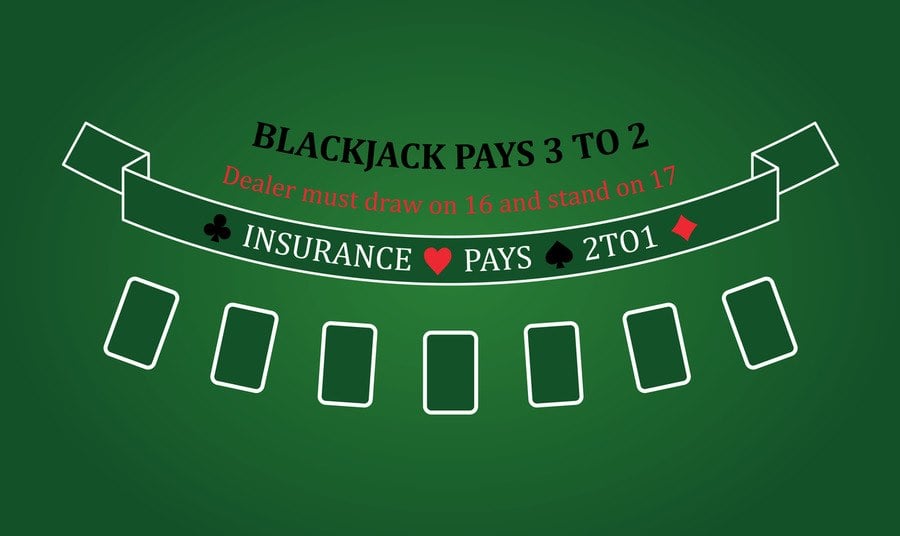
If the dealer has blackjack, the insurance bet wins and pays 2:1. If the dealer doesn't have blackjack, the insurance wager loses.
Importantly, insurance doesn't change your original hand or guarantee that you won't lose money. It's a separate wager with its own payout conditions.
When Is Insurance Offered?
Insurance becomes available immediately after the dealer deals the initial cards and reveals an Ace as their face-up card.
At this point, the dealer offers eligible players the opportunity to place an insurance wager before checking for blackjack or continuing the round.
The option is available regardless of the cards in your own hand. You can take insurance with a low total, a strong hand, or even a natural blackjack.
However, insurance is only available during this specific stage of play. Once the dealer closes the insurance betting period, you cannot add the wager later in the hand.
How the Insurance Wager Works
Insurance follows a straightforward betting process, but it's important to understand both the wager amount and the dealer's role in determining the outcome.
Insurance Bet Size and Placement
At Cache Creek Casino, players can purchase insurance for up to half their original bet.
For example, suppose you place a $20 wager before the cards are dealt. If the dealer shows an Ace, you can place an additional insurance bet of up to $10.
You typically place the blackjack insurance wager in a designated area on the blackjack table, separate from your original chips.
The Dealer's Blackjack Check
After players have a chance to purchase insurance, the dealer checks whether their face-down card completes a blackjack.
If the dealer has an Ace and a 10-value card, the dealer has blackjack, and winning insurance wagers are paid.
If the dealer doesn't have blackjack, the insurance wagers lose, and regular gameplay continues.
How Blackjack Insurance Is Settled
The outcome of an insurance wager depends entirely on whether the dealer has blackjack. The cards in your own hand don't determine the insurance payout.
When the Dealer Has Blackjack
If the dealer reveals a natural blackjack, insurance pays 2:1.
Consider this example:
- Original blackjack wager: $20
- Insurance wager: $10
- Insurance winnings: $20
- Original wager lost: $20
In this scenario, the $20 insurance profit offsets the $20 loss on your original hand, leaving you with no net gain or loss for the round.
This example assumes your own hand isn't also a natural blackjack. If both you and the dealer have blackjack, the original wager is typically a push, meaning it's returned to you.
When the Dealer Does Not Have Blackjack
If the dealer's face-down card isn't worth 10 points, the insurance bet loses.
Using the same example, you would lose your $10 insurance wager, but your original $20 blackjack bet would remain active.
You would then play your hand under standard blackjack rules. You could still win, lose, or push on your original wager.
Insurance and the Original Wager
Although blackjack insurance is often described as protecting your original bet, the two wagers are settled independently.
For example, if you place a $20 original wager and a $10 insurance bet, you could lose the $10 insurance wager and still win $20 on your main hand, resulting in a net profit of $10.
However, if you lose both wagers, your total loss would be $30.
Insurance also carries a significant house advantage because the probability of the dealer having a 10-value card as their hidden card is generally less than the one-in-three probability needed to break even on a 2:1 payout.
Insurance and Even Money
Even money is closely related to blackjack insurance, but the two options aren't the same.
Even money may be offered when you have a natural blackjack, and the dealer's face-up card is an Ace.
Under standard 3:2 blackjack payout rules, a natural blackjack normally earns $30 in winnings on a $20 wager. However, if the dealer also has blackjack, the hand ends in a push.
Taking even money allows you to accept a guaranteed 1:1 payout on your blackjack instead of waiting for the dealer's hand to be checked.
For example, with a $20 original wager, accepting even money produces $20 in winnings regardless of whether the dealer has blackjack.
Blackjack Insurance FAQs
Understanding the rules before playing can help you feel more comfortable making decisions at the table. Here are answers to two common questions about blackjack insurance.
Is Blackjack Insurance Required?
No. Blackjack insurance is completely optional.
If the dealer shows an Ace, you can decline insurance and continue with your original wager. You aren't required to place any additional chips on the table.
Do Insurance Rules Vary by Game?
Yes. Rules can vary by casino and blackjack variation.
Cache Creek Casino Resort offers several blackjack options, including single-deck, double-deck, and six-deck games, along with variations such as Spanish 21, Free Bet Blackjack, and Blackjack Switch.
Rules involving insurance availability, even money, and other betting options may differ depending on the game.
Play Blackjack at Cache Creek Casino Resort
Understanding blackjack insurance is one more step toward feeling confident at the table. With a clear understanding of how side bets, payouts, and dealer checks work, you can focus on enjoying the game and making informed decisions.
At Cache Creek Casino Resort, you'll find an exciting selection of blackjack tables, including single- and multi-deck games and popular blackjack variations. Our High Limit Room also offers blackjack in an elevated setting with a full-service bar and dedicated casino cage.
Visit Cache Creek Casino Resort in Brooks, CA, and enjoy your next game!