

Poker vs. Blackjack: Key Differences
Poker and blackjack are two of the most iconic casino card games in the world, each offering a unique blend of skill, strategy, and luck. While both use standard playing cards and can be found in nearly every casino, the similarities essentially end there. The key differences between poker vs. blackjack lie in how the games are played, the level of strategy involved, and the kind of experience they create for players, whether it's the competitive energy of poker or the fast-paced rhythm of blackjack.Overview of Poker and Blackjack
Both poker vs. blackjack involve decision-making, probability, and a bit of risk, but the structure and objectives of each game are very different. Poker is a player-versus-player game that rewards strategic thinking, reading opponents, and managing bets over time. Blackjack, on the other hand, is a player-versus-dealer game centered around quick decisions, simple math, and an understanding of odds.
What Is Poker?
Poker is a competitive card game in which players compete against one another rather than against the dealer. The goal is to win chips or money by forming the best possible hand - or by convincing others to fold theirs through strategic betting and bluffing.There are many variations of poker, but most follow a similar structure: players are dealt cards, make wagers in multiple rounds, and reveal hands at the end. Popular forms include Ultimate Texas Hold'em, Omaha, and Seven-Card Stud, each with its own rules for betting and hand ranking.
What Is Blackjack?
Blackjack, also known as 21, is a card game where players compete directly against the dealer rather than each other. The objective is simple: get a hand total as close to 21 as possible without going over.Each card has a numerical value, and players decide whether to "hit" (take another card) or "stand" (keep their current hand). Face cards are worth 10, and Aces can count as 1 or 11. If your hand total beats the dealer's without exceeding 21, you win the round.
Gameplay Structure
While both games use decks of cards and betting rounds, the flow of play in poker vs. blackjack is strikingly different.
Number of Players
In poker, as many as 10 players sit at the same table and compete against one another. The dealer facilitates the game but doesn't play as an opponent.In blackjack, however, every player faces the dealer independently. You might share a table with other players, but each hand is its own battle against the house.
Objective of the Game
The objective in poker is to win the pot by holding the best hand or convincing other players to fold. Success comes from strategy, patience, and psychological insight.The objective in blackjack is to beat the dealer's hand by getting closer to 21 than the dealer does, without busting. Unlike poker, there's no bluffing or psychological battle with other players - it's just you, the dealer, and the math.

Role of the Dealer
In poker, the dealer manages the game, including dealing cards, overseeing bets, and enforcing rules, but isn't an active competitor.In blackjack, the dealer is your direct opponent. Every decision you make in blackjack, from when to hit to how much to bet, revolves around predicting and reacting to the dealer's hand.
Rules and Strategies
When comparing poker vs. blackjack, both games may share a deck of cards, but their rules and strategies couldn't be more different. Poker focuses on reading other players, managing risk, and mastering betting tactics over multiple rounds. Blackjack, in contrast, is about calculating probabilities, following proven strategies, and making quick, mathematical decisions against the dealer.
Basic Rules of Poker
In most forms of poker, players are dealt cards and use them to make the best possible five-card hand according to traditional rankings.A typical round includes:
- 1. Blinds or antes: Forced bets that start the action.
- 2. Card dealing: Players receive their hands.
- 3. Betting rounds: Players bet, check, call, raise, or fold depending on confidence in their hand.
- 4. Showdown: Remaining players reveal their hands, and the highest-ranking hand wins the pot.
Basic Rules of Blackjack
Blackjack rules are simpler and more uniform across casinos. Each player competes directly against the dealer, not against the other players.A standard hand begins when players place their bets. They're then dealt two cards face-up, while the dealer receives one face-up and one face-down card. Players can:
- Hit - Take another card.
- Stand - Keep their current hand.
- Double down - Double their bet for one additional card.
- Split - Divide a pair into two separate hands.
What Takes More Skill, Blackjack or Poker?
Comparing blackjack vs. poker, both games require skill, but poker demands more strategic depth and psychological awareness. Success in poker relies on reading opponents, bluffing effectively, and adapting to unpredictable human behavior. The more you play and learn, the more your long-term win rate reflects your skill rather than chance.Blackjack involves skill, too, but once the cards are dealt, decisions follow predictable probabilities. Over time, blackjack favors disciplined, mathematical play, while poker rewards intuition, observation, and emotional intelligence.
House Edge and Player Advantage
Every casino game has a built-in house edge - the mathematical advantage that ensures the casino profits over time. However, the size of that edge varies greatly between poker and blackjack.
House Edge in Poker
In most casino poker games, players compete against each other, not the house. The casino profits by taking a small percentage of each pot, known as the rake - typically around 5 percent. Because you're playing against other humans, not a fixed algorithm, your skill directly affects your odds of winning. In theory, a skilled poker player can maintain a positive expected return over time.
House Edge in Blackjack
Blackjack is one of the most favorable games in the casino for players. With a perfect basic strategy, the house edge can be reduced to 0.5 percent or less, depending on table rules. This means that, on average, a player might lose only 50 cents for every $100 wagered over the long run.However, casual players who make frequent mistakes can push that edge closer to 2-3 percent. Advanced players who use card counting or betting strategies can even turn the advantage slightly in their favor.
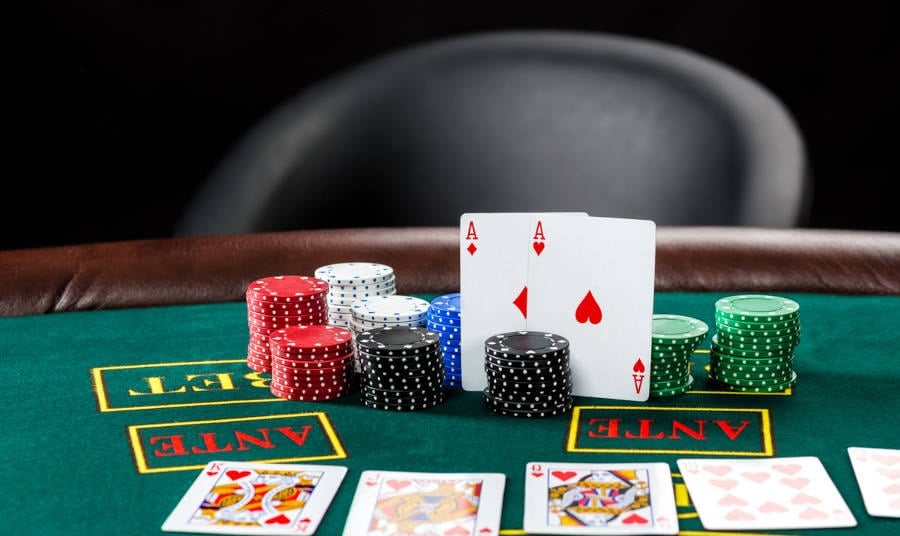
What Has Better Odds, Poker or Blackjack?
In terms of raw mathematics, blackjack generally offers better short-term odds because of its low house edge and straightforward rules. But poker provides greater long-term potential for skilled players who can outperform their opponents.For beginners, blackjack is often the better choice for consistent play and easy-to-follow strategy. For seasoned strategists, poker offers a higher ceiling - where intelligence, patience, and psychological skill can translate into real profit.
Betting and Payouts
Comparing poker vs. blackjack, both involve betting, but the structure and rewards differ dramatically. In poker, players wager against one another, building pots that can grow substantially with each round. In blackjack, players bet directly against the dealer, with payouts based on fixed odds.
Poker Bets and Payouts
Poker is built around strategic betting. Each round offers opportunities to bet, call, raise, or fold, and the amount you wager depends on your confidence in your hand and your ability to influence opponents' decisions. - Pot-based payouts: The winner takes the entire pot, which consists of all bets made during the hand.
- Variable earnings: Your profit depends on the number of players, the size of bets, and your own skill level.
- High reward potential: Strong hands or successful bluffs can yield large payouts, especially in no-limit games.
Blackjack Bets and Payouts
In blackjack, betting is straightforward and follows a fixed payout system. Players place their wager before cards are dealt, and outcomes are decided at the end of the hand.Typical payouts include:
- Winning hand: Pays 1:1 (you win the same amount as your bet)
- Blackjack (Ace + 10-value card): Pays 3:2 on most tables.
- Insurance bet: Pays 2:1 if the dealer has blackjack.
- Push (tie): The player's bet is returned.
Social and Psychological Aspects
Beyond cards and chips, poker vs. blackjack also differ in how players interact and engage with the game on a psychological level. Poker is deeply social and strategic, while blackjack is more focused on decision-making and timing.
Player Interaction in Poker
Poker is a social showdown. Every decision you make takes place in front of other players who are trying to read you as much as you're reading them. Table talk, facial expressions, and betting patterns all become part of the strategy. This constant interplay makes poker both intellectually challenging and emotionally charged.
Player Interaction in Blackjack
Blackjack, by contrast, is far more individual. While multiple players can sit at the same table, each competes independently against the dealer. Interaction between players is minimal and usually limited to friendly conversation.
Bluffing and Psychology
Bluffing is a defining feature of poker and is absent from blackjack. In poker, a convincing bluff can turn a weak hand into a winning one, making psychology and deception powerful tools. In blackjack, every action is transparent - your cards are visible, and your decisions follow mathematical logic rather than mind games. Popularity and Game Variations
Looking at blackjack vs. poker, both games have evolved into countless variations, each offering a slightly different experience.
Popular Poker Variants
- Texas Hold'em: The most popular poker game worldwide, played with two hole cards and five community cards.
- Omaha: Similar to Hold'em but with four hole cards and higher hand combinations.
- Seven-Card Stud: A classic format without community cards, emphasizing memory and calculation.
- Three Card Poker: A faster-paced casino variant where players compete directly against the dealer.
Popular Blackjack Variants
- Classic Blackjack: The traditional version found in most casinos.
- Spanish 21: Removes the 10 cards from the deck but offers generous bonus payouts.
- Blackjack Switch: Allows players to switch cards between two hands for a strategic edge.
- Progressive Blackjack: Adds a side bet linked to a growing jackpot for matching combinations.